
Offering Care Away From Home
September 2, 2026
By Allie Lundblad
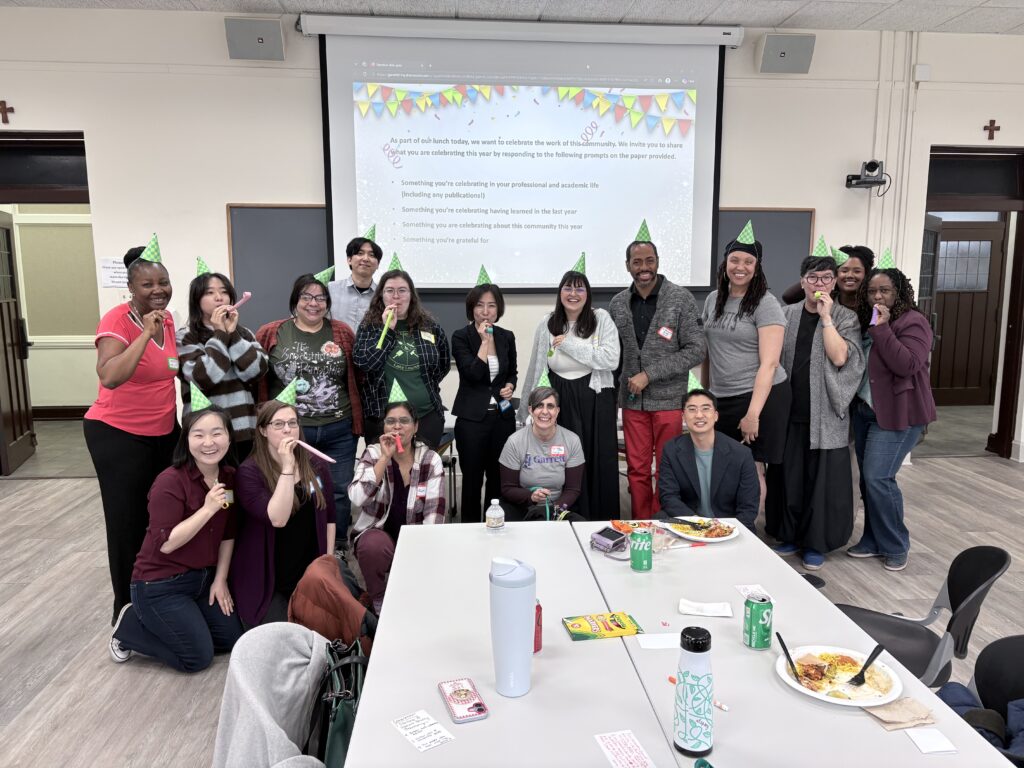
“I’ve never seen a group of adults so excited about wearing party hats,” said MAPCC student Maddy Martinson at the Pastoral Counseling and Pastoral Theology gathering on May 1.
The party hats, checkered in shades of green with optional dinosaur spikes, were only the finishing touch on an event meant to build relationships among a community of students, faculty, and alumni committed to care. The day-long conference was funded by a grant from the United Methodist Church General Commission on Religion and Race as part of an initiative intended to support students in the Master of Arts in Pastoral Care and Counseling (MAPCC) program. These students, including the program’s many international students, sometimes find themselves immersed in the hard work of learning to care for others while far from their own systems of support. Under the leadership of Dr. AHyun Lee, the student planning committee—Yeo Jin Yun, Jae Eun Hwang, and myself, Allie Lundblad—chose the theme “Away from Home.”
“We hope that this gathering brings attention to the multifaceted and very human experience of being away from home and what unexpected fruits this bears,” explained Yeo Jin, as she welcomed attendees to the event. “The away-from-home experience could be quite literal, with the physical move across the globe from one’s home and community to the middle of the United States. The experience could be theological with a deconstruction of one’s embedded or ‘home’ understanding of God and others. Regardless of how the away-from-home experience presents itself, it requires acknowledgment and demands new and creative expansions of what home actually is.”
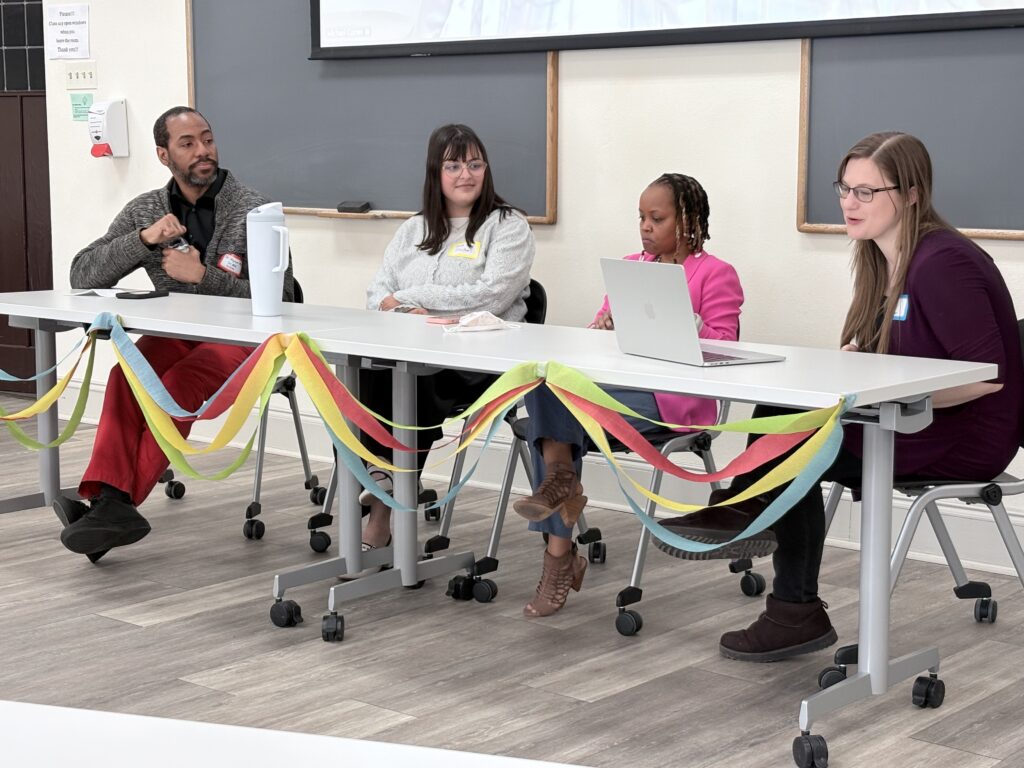
Dr. MK and Greta Todd—both currently working as therapists—and Wanjiku Kamuyu-Anderson, a board-certified chaplain, kicked off the event with an alumni panel discussion of the theme. Together, the panelists painted a picture of home as those moments, places and people that offer both the space and the support we need to be fully ourselves and as something that caregivers seek to embody for those having “away from home moments,” as Wanjiku described it. “You have to be intentional about making space or making home, intentional about defining that for yourself and cultivating those things with other people in your community,” she said
“And declaring it,” Todd added. “Telling the people that you found, ‘You are home for me.’” She continued, “If you then feel safe to express to them, ‘Hey, I’m not feeling at home, I’m feeling disjointed, I’m feeling lost,’ they can say, ‘Girl, you told me six weeks ago, I’m your home. That didn’t change for me. What changed for you?’”
Dr. MK described the digital picture frame he’d purchased to remind himself of his community, particularly in moments when he feels alone. “Whatever we have to do to remind ourselves,” he said, “because this culture and this society is hell-bent on disconnecting us from home, making us feel like we don’t belong, and tearing us down. We have to be intentional, as we said earlier, to create places of home and revisit them frequently, early and as often as possible.”
The celebratory lunch following the panel included not just party hats but a buffet of dishes from Olive Mediterranean Grill, and an invitation for alumni, faculty, and students alike to share highlights of the preceding academic year. “As a first year student, not only was it great to celebrate the completion of one year of coursework, but it was also wonderful to hear about all of the different paths that other MAPCC students are venturing toward,” Martinson reflected. “It gave me a glimpse into what is possible for my future vocation, and reminded me that I, too, am capable—especially with the support of this community.”
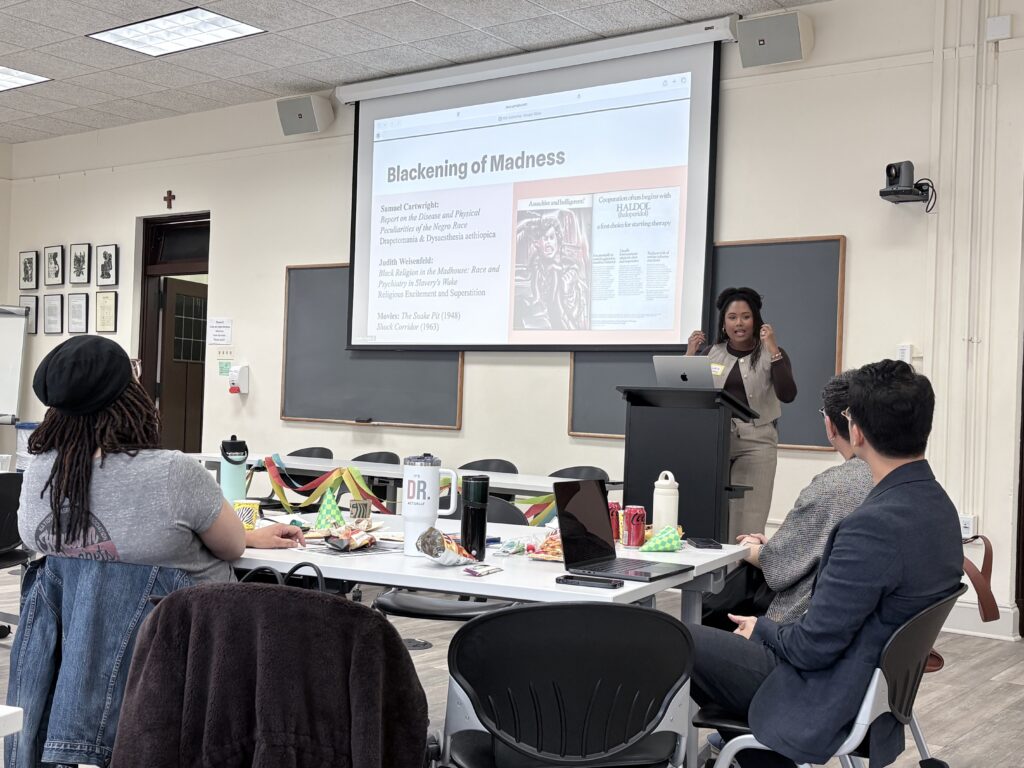
That afternoon, two students graduating from the PhD program in Pastoral Theology presented portions of their dissertations, speaking on issues that leave people alienated from communities of support and from themselves. Candice NunnTelfort explored Black women’s experiences of psychosis in an anti-black culture that capitalizes on cultural stereotypes of psychosis. “The symbolic register perpetuates this ordinary framing of psychosis as Black, male, and violent,” they said. “Black women’s erasure within psychosis exists in all realms, including the cultural imaginary, clinical practice, theory and care.” As Black women’s experiences of psychosis go unnoticed and unexamined, so too do opportunities for care.
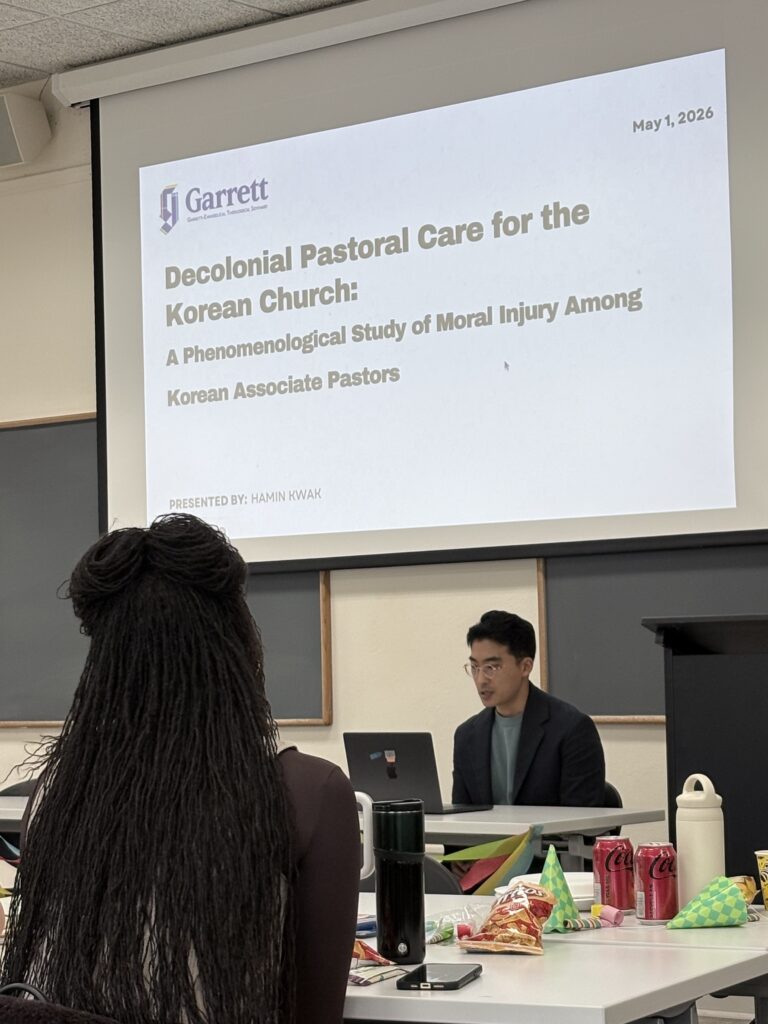
In the second presentation, Hamin Kwak offered a postcolonial exploration of the moral injury sustained by Korean associate pastors within a hierarchical church system that too often shields senior pastors’ misconduct. To care for associate pastors in a way that fostered the healing of their “fragmented body, mind, and spirit,” he suggested a “homing spiritual care, which is more focused on the ancestral wisdom of Korean people and Korean associate pastors.” Such care helps to restore a sense of being made in the image of God and of having moral agency, a process that Kwak describes as “a returning journey to their spiritual home.”
Together, the presentations exemplified relevance and possibilities for pastoral theology scholarship and added to a day-long conversation that embodied, as hoped, this theme’s multifaceted nature. “It was wonderful to be among my spiritual care colleagues at the first PCC conference, thinking and discussing being ‘away from home,’” said Kenya Tuttle, who is currently working on her own dissertation. “Home looks different in a stolen land that was never made for most of us (women and people of color) to feel safe. Being able to collectively reflect with colleagues in today’s political climate using our unique toolkit of spirituality, clinical practice, and care brings an essential awareness to the challenges we face that leave folks feeling unsafe and without sanctuary.”
Dr. AHyun Lee closed the day with a public lecture that examined clergy sexual abuse in the context of immigrant communities, where issues of documentation or other forms of minoritization become added vulnerabilities when abuse betrays the promise of church as a supportive, spiritual home. In such a situation, a pastoral response “must do at least two things at once: lower the risk and deepen accountable care,” she said, before suggesting particular practices that would strengthen a caregiver’s sensitivity to issues of safety within the community, the agency of victim-survivors, the impact of trauma, and the nuances of immigration. In doing so, she again affirmed that home is often something we must build intentionally.
“The Away from Home conference created meaningful and necessary space for us to reflect together on what care requires when home becomes complicated, unsafe, or inaccessible—especially for immigrant, minoritized, and displaced communities,” Dr. AHyun reflected afterward. “I was deeply honored to offer the public lecture, and my hope is that this gathering will continue to shape more victim-survivor-centered, culturally attentive, and institutionally courageous forms of pastoral care at Garrett and beyond.”