

The Church Outside the Church
October 17, 2026
Learning everyday ministry in Chilean community
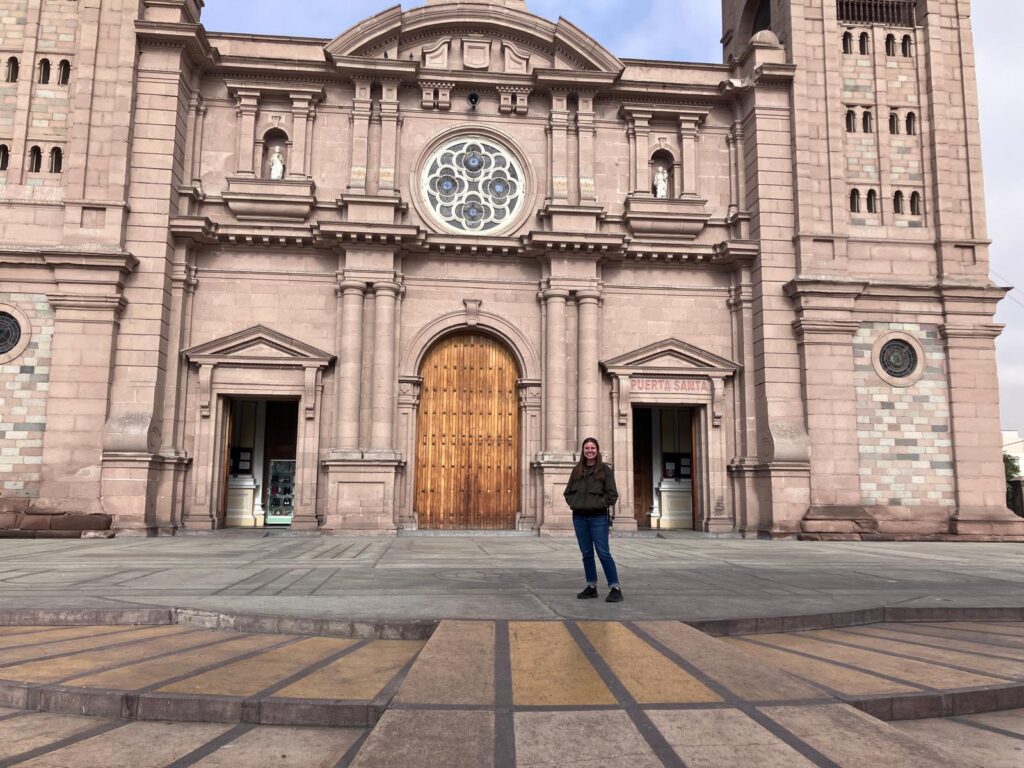
Months after returning to Alaska from a summer of field education in Chile, Racheal Kerr is still reflecting on the question, “What does it mean as Christians to become part of other communities, but still hold on to who we are?”
For many years, Kerr had been interested in cross-cultural. While serving in the Peace Corps as a teacher in rural South Africa, she came to understand schools as “places where community transformation can happen” and a “huge resource for the community.” Upon returning to the United States, she entered a new urban teaching master’s degree program in Dallas, where her Peace Corps experience helped her navigate the infrastructure gaps of a program still in development. Then, while teaching in Texas, she began to feel a call to theological studies and began classes at a school there but found the program too intensive and not financially sustainable. She made the decision to explore teaching in rural Alaska instead, but the call followed, quite literally.
“My pastor in Dallas called me and asked if I was still thinking about seminary,” she said. “I told him I’d decided to table it and probably wouldn’t ever do it. We had a really long conversation, then a series of conversations. He said, ‘You really should go,’ and convinced me to do an MDiv rather than a theological studies degree. And I’m really happy with that.” A couple of years after arriving in Alaska, Kerr enrolled at Garrett Seminary.
Meanwhile, faculty at Garrett were exploring another, institutional call to cross-cultural work as they began work to establish regional hubs, one of which would serve Latin America. The first step was strengthening partnerships with the Methodist Church and Methodist Seminary of Chile, and then with Biblica Virtual in Buenos Aires, Argentina.
“During our visit to Chile in May 2025, we had the opportunity to visit several Methodist schools and other ministry sites,” said Dr. Emma Escobar, professor of faith-based organizing and director of the Centro Raíces Latinas. “As we visited these locations, we began to see their potential as field education placements for Garrett students, particularly for students who speak some Spanish and are interested in an immersion experience in a Latin American context. This prompted conversations with Dr. Paul about whether there were students who might be a good fit and what would be needed to make such an experience possible.” The delegation that traveled to Chile included leaders from the Stead Center for Ethics and Values, the Center for Ecological Regeneration, and the Centro Raíces Latinas, all of which contributed financial support for a Garrett student to complete field education in Chile.
Kerr’s background in education, her interest in infrastructure-in-development, and her cross-cultural experience made her just the right candidate for the job. In June of 2026, she traveled to Chile to spend eight weeks under the mentorship of Rev. Alejandra Romero Sanzana, district superintendent of Northern Chile and pastor of the Methodist church in Iquique.
“I sat down with my mentor and she asked me what I wanted,” Kerr said. “I wanted to see how the church intersects within a different culture, a different community, and a different vocation—the church outside the church. I wanted to see what the church was doing in worship, but I was more focused on the vocation of the church in these schools and in this community. I also wanted to see how they get along with the indigenous people and people outside of Methodism. What’s the history been like there?”
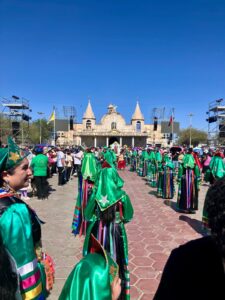
Kerr spent significant time at a group of three K-12 Methodist schools, the oldest of which—Colegio Inglés in Iquique—was founded by Methodist missionaries from the United States nearly one hundred and fifty years ago. At one of the schools, she was able to sit with the teaching teams and learn about the curriculum. “They actually showed me their lesson cycles and how they plan to make a culturally appropriate curriculum, how they’re addressing that in their community because of the faith values of the original peoples in the area and the traditions that are still very present,” she said. “That was really awesome.”
Throughout her time, Kerr understood her foundational task as establishing relationships and learning the communities. This meant navigating in-the-moment language differences and learning to ask the kinds of questions—like “What’s your favorite Chilean phrase or word?,” “Who do you look up to in the church?,” or “What do you love to read?”—that would start the conversations she wanted to have. Immersing herself in the community then shaped her view of ministry.
“Hospitality in Chile is top-notch,” she said. “That in and of itself, just culturally, they’re ministering to each other because they are so hospitable. And that’s just rooted in Chilean identity. Who Chileans are in a sense is ministerial and it’s linked to their faith.” That point, the sacred nature of everyday life, was manifest for Kerr by the omnipresence of bread and wine, which she wrote about upon returning home. Her experience in Chile is now shaping her academic work, providing lived experience of ideas explored in her global Christianity course, for example. It has also paved the way for future students interested in contextual education in Chile.
“It’s my understanding that Racheal became the first Garrett student to complete her contextual education in Latin America,” Dr. Escobar said. “It is a great joy to see our partnerships in Latin America creating concrete opportunities for our students to explore and develop their ministries in different cultural and ministry settings. Racheal’s experience in Chile is a wonderful example of how the commitments outlined in our partnerships and the broader vision for the Latin America Hub—can become meaningful educational and formational opportunities for Garrett students.”