

Let’s Talk Globally: A Conversation with Dr. Dong Hyeon Jeong
December 12, 2025
Allie Lundblad
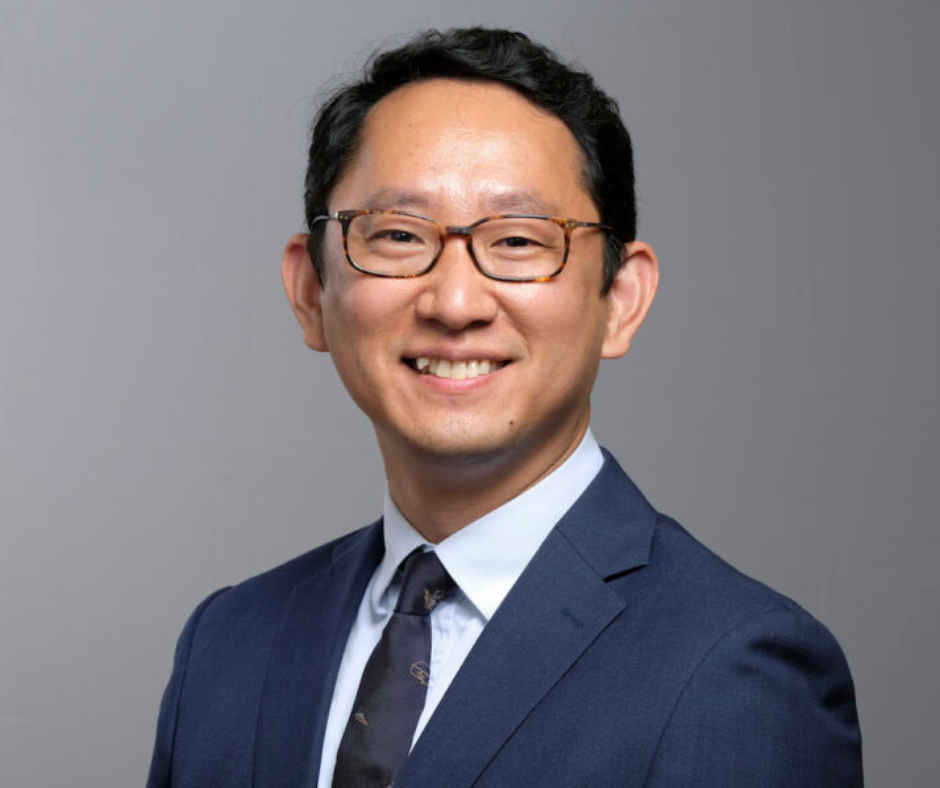
Dr. Dong Hyeon Jeong, who grew up the child of missionaries in the Philippines, remembers the moment when Mount Pinatubo erupted and the world went dark. He remembers shoveling ashes with his parents off their rooftop so that the house would not cave in. The scene was “apocalyptic,” he says. That moment represented either “divine encounter or trauma, or both,” and raised enduring questions. “I’ve been thinking about what it means for us as Christians to believe in God alongside nature,” he said. “Where does the Earth, where does the more-than-human fit in all of this ecotheology, as we would say?”
Dr. Jeong’s recent book, Embracing the Nonhuman in the Gospel of Mark,— the topic of October’s Let’s Talk Globally event — explores this question about creation as it relates to a different sense of being “non-human”: the dehumanizing rhetoric often used by governments to deny aid, rights, or responsibility for certain groups of people. Dr. Jeong spoke of the “animalizing conditions of [his] fellow Filipinos” exacerbated by corruption in the government that misdirects funds meant to aid recovery from natural disasters. He also pointed to the increasing “dehumanization and animalization of migrants” here in the United States. All of this, he said, depends on an animal-human divide that designates some people as “less-than-human.”
“If they want me to sustain this hateful rhetoric by hating the animalized, whether as humans or more-than-humans, I will say no.” Dr. Jeong said. “We will not hate, but we will embrace. We will find our divinity, our humanity, our understanding, our faithfulness and our goodness by being closer, by listening and being guided by our older siblings, the first of the creations.”
In speaking of the more-than-human as the “older siblings” of humankind, Dr. Jeong drew on Jacques Derrida’s critique of anthropocentrism, his reading of the creation story, and his insistence that the rest of creation knew God long before humans — last to come into existence — ever did. Dr. Jeong then offered two examples of passages in the Gospel of Mark that offer fresh meaning when viewed through this lens. First, he noted that the Markan story of Jesus’ days in the wilderness offers no description of his conversation with Satan but describes him as being “with the wild beasts.”
“That was his so-called ‘preparation’ ministry,” Dr. Jeong said. “I don’t know about you, but I grew up with animal companions. There is something about being exposed, living with animal companions day in and day out. It changes who you are, let alone if you are both in the wilderness.”
Dr. Jeong also pointed to a passage in which Jesus compares the Kin-(g)dom of God to a mustard seed, a comparison that speaks to the right relationship of humankind with both the creation and the divine. “It’s planted one day and it grows,” he said. “It’s there. Humans don’t meddle. Humans can join later and enjoy the shade, enjoy the fruits. But the growth of that mustard seed, that smallest of seeds, is because of God and because of nature. Humans, don’t worry. You don’t have to meddle every single time. The Kin-(g)dom of God will manifest — is manifesting — with or without.”
The conversation with Dr. Jeong included reflections and questions from Dr. Rolf Nolasco and PhD student Jene Lee, as well as participants in-person and online. Lee further explored the violence of animalization toward Asian descent communities, highlighting language used to describe children sent to the United States for adoption — some under false pretenses — after the Korean War. Lee also shared a Korean proverb that highlights the role of the more-than-human: “A bent tree protects the ancestor’s mountain.”
“This proverb perfectly captures the book’s central but paradoxical insight,” he said. “The bent tree symbolizes those deemed worthless or flawed by imperial standards: the animalized, the colonized, the non-human. Yet it is these very beings, not the straight beautiful trees prized by the empire, that ultimately protect the community’s sacred ground. The transformation that Dr. Jeong envisions is not about straightening ourselves to fit an oppressed mind. Instead, it is an everyday revolution of recognizing the protective power inherent in what has been banned.”