

Healing Queer Religious Trauma
June 5, 2026
Dr. Arelis Benítez reflects on work the church must do
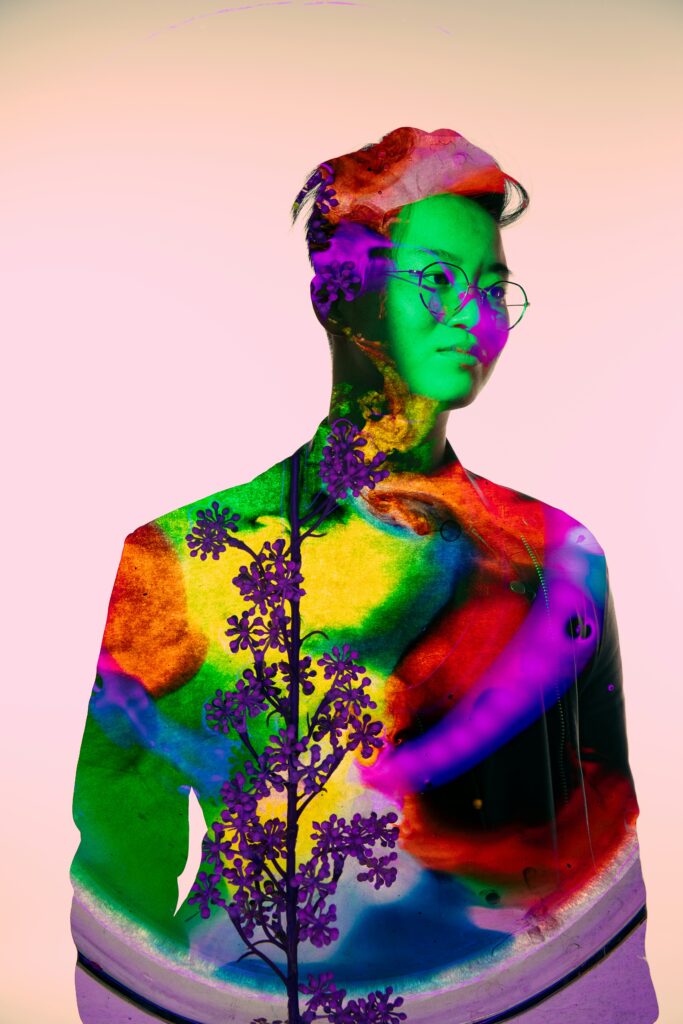
“I wish there was a magic wand that could instantly fix religious trauma, but my reality has been about learning to navigate the tension, and expanding my own thresholds and consciousness to integrate different identities.” Dr. Arelis Benítez is Garrett Seminary’s Assistant Professor of Pastoral Theology, Psychology, and Latiné Studies. As a chaplain she has experience working with LGBTQIA+ persons to navigate spiritual wounds they received in ecclesial spaces, but this calling is also deeply personal. As a queer person who grew up in a Seventh Day Adventist Church that wouldn’t make space for her own burgeoning self-identity, she’s still sorting through the psychological impacts of this harm and how she can heal. “I don’t throw everything away about my Seventh Day Adventist theology because in many ways it’s what’s kept me standing,” she confesses. “I am salvaging what makes me feel whole, and I’m also pushing back on the shame that was imposed on me—reframing theology and reclaiming who I am.”
For many LGBTQIA+ people who experience religious trauma, the welcoming language that churches often use to describe themselves deepens the harm and betrayal. It’s one thing to experience rejection from a world that’s awash in homophobia and transphobia. It’s another to encounter that prejudice in people who have promised to love you completely. “We grow up with an expectation that—as one of the only spaces in society that proclaims its intention to care for people’s mind, body, and spirit—churches will be welcoming,” Dr. Benítez notes. “It’s similar to the ways that we naturally assume that family members won’t hurt us, but tragically most of the wounds we heal throughout our lives come from the first places we experience community.”
What makes this harm doubly painful is that it is often couched in the language of love and care. “Authoritative figures who claim to represent God will say things like, ‘God loves the sinner but hates the sin,” but the ‘sin’ in question is an essential part of who we are,” Dr. Benítez explains. “It’s particularly violence because it fragments the self, asking us to separate our body from our minds and spirit. Religious doctrine taught me to betray my own intuition, betray my own body, instead of teaching me to trust what I was learning about myself.” In this context, identity becomes a place of fracture instead of joyful exploration. “By making my own queer identity a theological conflict, it turns my personhood into a problem to be solved,” she continues. “I don’t want to be anyone’s problem, and I deserve more than being tolerated for existing.”
Religious trauma’s psychological effects are significant and long-lasting. Often, it causes anxiety, depression, chronic post-traumatic stress disorder, and/or a fundamental distrust of people’s own self-knowledge. The significantly higher rates of religious trauma in LGTBQIA+ people are part of the reason why queer folks are more likely to attempt suicide. “For me, my whole nervous system was shot,” Dr. Benítez notes. “The narratives I inherited put so much anxiety into my body. Too often, that feeling of ‘I am the problem,’ can lead to hiding, silencing, and self-isolation—a loneliness produced by the desire to deny parts of ourselves that are actually very, very good.”
If the bad news is that queer people experience religious trauma at significantly higher rates, and suffer its attendant symptoms, the good news is that healing is possible—and religious communities can play an essential role in nurturing that process. “Part of this work is personal, a process which benefits significantly from working with a care provider,” Dr. Benítez notes. “With practice, we can focus on our breath, quiet the mind, try to identify where trauma lives in our bodies.” Garrett’s Master of Arts in Pastoral Care and Counseling intentionally integrates trauma-informed care practices into its curriculum to offer graduates these tools and more, giving future clients more ways to heal. But recovery is also a communal process, and churches can play an essential role in shaping theologies that honor and celebrate LGBTQIA+ people.
“It can be scary to let our old theologies crack and fall apart. It makes us ask ourselves, ‘What’s going to be left? Who is going to be left? Where do I go and how do I rebuild?’” Dr. Benítez notes. “Churches can help people consent to that deconstruction, offering agency and wisdom to put the pieces back together in a way that is healing. It makes it less scary to do this work in community, to know that I’m not the first person to experience this and, unfortunately, I won’t be the last.”
But that call to churches must transcend a rainbow flag and a promise that everyone is welcome. Particular harm requires intentional redress. “Celebration goes beyond waving a flag—we can do that in parades through a city. Celebration means also finding our lives and personhood reflected in the text,” Dr. Benítez contends. “Yes, the flags are waving, but are we reflected in the sermons? Yes, the flags are waving, but are we reflected in the programming? I need a community that does more than include me. I need one that honors me the same way that it honors everyone else.” As she notes, this isn’t easy work. It requires significant effort and dedication. But churches who commit to this road often find God’s resurrecting power waiting for them.
LGBTQIA+ Christians aren’t a theological problem, and are more than people who need help. We can become a blessing for wider community, offering new lenses to understand sexuality and gender, new dimensions to theological reflection. “It’s a wonderful blessing that, as queer folk, we come into the world fluid,” Dr. Benítez says. “For a church that suffers from colonial narratives and dualist thinking, this mission to integrate mind, body, and spirit—to proclaim all of it as good and made in God’s image—can unburden the shame that so many people experience, not just queer folks.”
A church where any person is made to feel like their body, gender, or sexual orientation is condemned is a space where every person harbors theological anxiety: Am I good enough? Am I being a woman or a man in the “right” ways? Does God love all of me? All of these fears and more inhibit the beloved community that God longs for us to share. “Jesus came into this world to disrupt the divisiveness between the haves and have-nots, the saved and the condemned, ‘rightful’ living and ‘wrongful’ living,” Dr. Benítez concludes. “It’s all of our responsibility to work and heal that breach.”