

Building an Accessible and Affordable Seminary
October 16, 2025
By Benjamin Perry
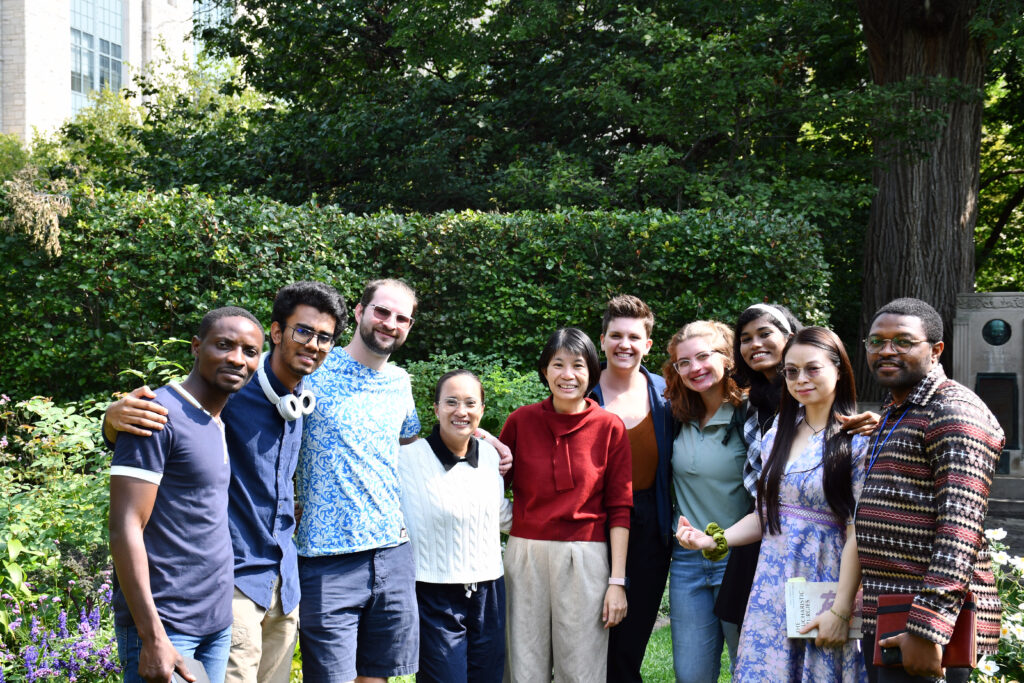
Fifty years ago, most students entering seminary were in their twenties. Predominantly male and overwhelmingly white, they often had strong affiliation with a denomination who helped them finance their studies, and for whom students could expect to work upon graduation. Reflecting these structural realities, those learners generally chose to study full-time as residential students. The church, however, has undergone dramatic change in the interceding half-century. With congregations across the United States shrinking, the amount of support most seminarians can expect to receive is likewise contracted. The promise that graduates will quickly find good-paying work has been similarly shaken. And yet, for much of this time, expectations for how students should study remained constant—to the detriment of both seminaries and people pursuing their call to ministry. Over the past four years, however, Garrett embarked on a radical shift in how we structure learning to be responsive to these changing realities. The results are in: This bold experiment in accessibility and affordability has steadily increased the vitality of our student body, enriched the seminary’s learning culture, and deepened our relationship to the institutional church—both in the United States and throughout the world.
To understand why this shift has been so successful, it’s crucial to recognize what kinds of students are now more inclined to pursue theological education. “Our learners tend to be increasingly bi- or multi-vocational. They already have jobs, they have families,” describes President Javier Viera. “We’re also experiencing a more diverse student body. We have more people of color, women, queer folks, many who come to us from around the world where the church is growing and thriving.” By adapting its academic models, spiritual formation, and community to cater to these students’ unique gifts and needs, as well as the busy schedules of people already serving churches, Garrett has attracted an abundance of learners at a time when seminary enrollments are shrinking across the country. “When we started to investigate what would attract students to theological education, we realized that every single strategy to reach new populations of students was rooted in us removing a barrier or obstacle to theological training,” explains Scott Ostlund, Vice President for Enrollment Management. “It could be a barrier like the availability of digital modalities because folks wanted to remain in their communities of accountability instead of uprooting themselves to a new learning environment, or it could be an affordability obstacle in the way we were pricing programs or requiring residential instruction. When we began to remove those obstacles, we immediately started to see our degree enrollment change.” In Fall of 2021, Garrett admitted 71 students. In Fall of 2025, that number is 119. A 59% increase isn’t chance, it reflects a structural shift.
What’s crucial to understand, however, is that this change simply would not have been possible if it had not been driven by Garrett’s academic vision. “The number one reason why Garrett has been able to pivot in a way that is different from our peers is that it was led by our faculty,” President Viera explains. “That’s not something you often hear from higher education administrations. Too often institutions change because the market tells them to — because recruiters or consultants say, ‘This is what’s trending.’ But in our case, it was the faculty themselves who said, ‘Something deeper needs to shift in how we teach if we’re going to shape the future of the church and those who will lead it.’ That conviction is what’s driving our transformation.” When Academic Dean Jennifer Harvey arrived two years ago, she was thrilled to find this deep, compelling vision for how Garrett can better resource Christian communities. “They joyfully adopted the mantle to be the educational community who prepares leaders from the very communities where the Church is growing quickly,” she says, “and to do so in a way that mitigates the likelihood that we are importing Western, Eurocentric, colonial education patterns.”
Garrett began this process by asking partners in the United Methodist Church and other partners in global Methodism how the seminary could empower those who feel called to ministry. These conversations yielded a more accurate picture of the ecclesial landscape. They heard from local ministers who would love to pursue graduate level education but did not want to leave the parish they already served. International partners described the high cost of studying in the United States, and students who didn’t want to remove themselves from their homeland’s learning context, even if they could afford residential education. Alums who served bi-vocationally as ministers and counselors expressed desires for a degree program that more specifically prepared students for that work.
After conducting listening circles, faculty and administration carefully responded with programs curated to meet these needs. “Partnership with the UMC helped us create pathways for people who are already serving local churches as pastors,” Ostlund explains. “We made a commitment that getting a visa to come to the US wasn’t going to be the only way an international student could study at Garrett—and that we weren’t going to create a two-tiered model between students who could study in Evanston and a second group who could only take classes online in a clunky user experience.” Garrett launched the Masters of Arts in Pastoral Care and Counseling degree, which has rapidly become our swiftest growing program.
These changes aren’t as simple as launching an online learning portal and opening the door to a new group of learners. “Even something as basic as when you offer your classes is something we have to consider from an access perspective,” Dean Harvey says. “So, we have lots of evening classes for students who work during the day, we think critically about time zones so students can complete their studies in Korea or Zimbabwe without having to always attend class in the middle of the night.” Garrett has also invested significantly in classroom technology and faculty training, to create hybrid pedagogies that deliver a robust experience whether students are sitting side-by-side in Evanston or half-way across the world. And still, opening the door widely isn’t enough. “Access isn’t just about being able to sign in online. Access is also about feeling like we belong,” she concludes. “We can improve affordability, offer more paths to the table, but it’s also how we create a spirit of relentless welcome because if someone doesn’t feel like they’ve been welcomed, that’s a barrier to whether you genuinely have access.”
To fulfill this deeper calling, Dean of Students Thehil Russelliah Singh has completely reimagined spiritual formation and extracurricular offerings to meet a wide array of learners’ needs. The seminary still hosts many opportunities for residential students to break bread and create informal connections, but these are paired with frequent events that foster hybrid community. “All of our student life events are now blended synchronous, so everything our in-person students have access to, our online students can attend as well,” she explains. “Whether that’s Let’s Talk Globally, weekly chapel services, a new series called Let’s Talk Careers, or any other chance to learn.” Students who primarily attend online notice the intentionality with which they are included. “We’re flipping the script by creating an engaging, dynamic experience online while still retaining a robust residential experience.”
Indeed, Garrett’s commitment to building vibrant learning environments for international students is far from finished. The seminary is also launching global hubs in Africa, East Asia, Latin America, and South Asia, the major georegions from which students are enrolling. “We have an opportunity for our African students to congregate at Africa University in Mutare, Zimbabwe with two faculty members in Summer 2026,” Dean Singh says. “And we’re in the midst of creating similar cohorts across the globe.” These global hubs will offer students in-person formation experiences, while also strengthening ties across the global church. This commitment to transnational theological education will only deepen when the Garrett Collective officially launches this fall, offering low-cost theological resources and learning cohorts to communities on every continent.
Indeed, as much as affordability and accessibility are sometimes framed as mostly benefiting those students who would otherwise be unable to pursue theological higher education—and to schools who benefit from the diverse perspectives and tuition dollars students bring with them—it’s Garrett’s commitment to the church’s thriving that redoubles commitment to the present trajectory. “If we truly believe in the priesthood of all believers,” President Viera says, “then we have to reckon with the systems that have limited that calling. What would it mean for the church — and for theological education — to be restructured around that radical affirmation?” Garrett’s recently launched laity discernment cohort is another example of what it looks like to follow that theological commitment, creating an affordable pathway for people who are often asked to labor for local churches but are not often resourced by denominational infrastructure and finances. “We’re forming leaders wherever they’re called,” President Viera concludes. “That openness is reshaping Garrett — and it’s a gift to the church, to the world, and to ourselves.”