

Nurturing Hope in Chicagoland
October 2, 2025
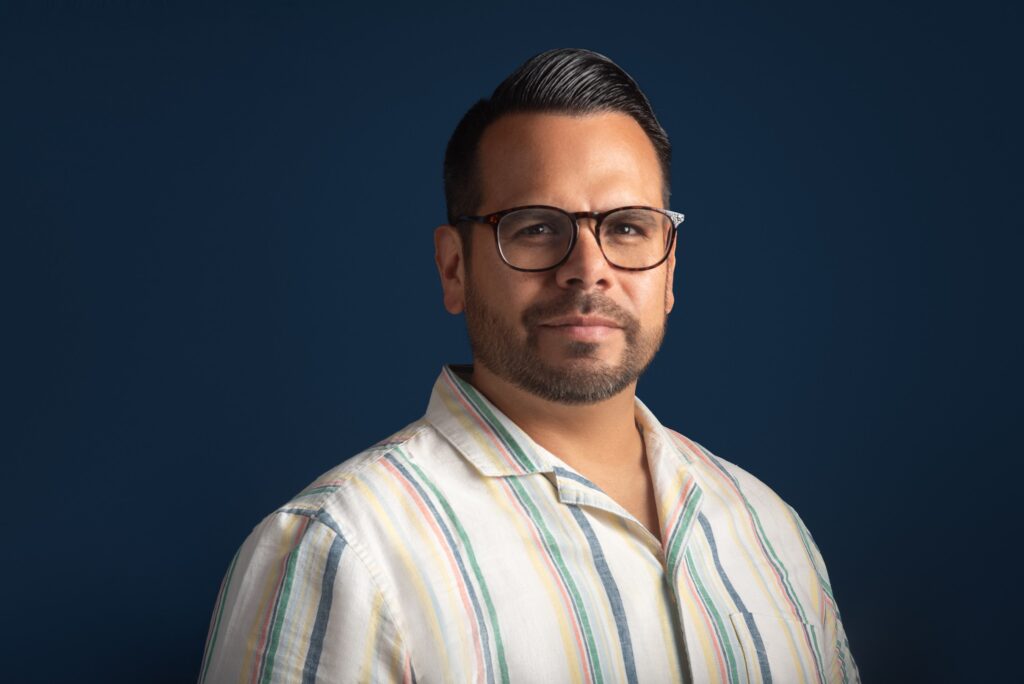
When Rev. Moises Mendez accepted a pastoral position in Blue Island, Illinois, he wasn’t just answering a call to ministry—he was returning to serve the people who raised him. “That’s where I grew up, where I cut my teeth, and although I’d left the community, the community never left my heart,” he says with affection. “Ironically my name is Moses, and Moses shouldn’t have made it out of the hood. His mom innovated with love, put him in a basket, and he was given an inordinate amount of privilege. But that privilege was for a purpose. My mom innovated, too—it was through her love she figured out how to do as Moses’ mother did: innovate from love and necessity.” For Rev. Mendez, that means utilizing the business experience he garnered in the aeronautics industry. In 2023, he started the Hope Center to empower residents in the Chicago suburb. Today, he’s beginning the Garrett Seminary Doctor of Ministry program in strategic leadership for Black congregations to learn how he can deepen the center’s social impact ministries and expand his church’s reach.
Blue Island is a predominantly Black and brown neighborhood full of families who experience economic precarity. Rev. Mendez is no stranger to these challenges. The child of Mexican immigrants, his parents made significant sacrifices to help him navigate school and afford college. But that didn’t mean a cushy life for Rev. Mendez and his siblings; the youngest of four, he can remember his brothers fighting over who would sleep on the couch while the others made do with a sleeping bag on the floor. It’s part of why he’s convinced the church needs to offer more than faith resources to folks who live through material struggles. “I wanted to meet more than just folks’ spiritual needs,” he says. “I wanted to figure out how I could address the social and economic problems taking place in our community.”
Hope Center Blue Island focuses on three distinct areas of economic development—technology, agriculture, and automechanics—offering skill-shares and training programs designed to help participants jumpstart careers in lucrative fields. The agriculture initiative also seeks to alleviate food security by hosting workshops on everything from germinating seedlings, hydroponic cultivation, to food canning protocols. “We are created in God’s image, which means we are called to be co-creators in His work,” he observes with pride. “At The Hope Center, that calling takes shape in tangible ways: helping our neighbors build self-agency by tackling food insecurity, opening pathways for economic empowerment and mobility, and equipping community members to launch their own small ventures through access to microloans.”
The center has already had a dynamic effect on the neighborhood; in its first year of operation, more than 10,000 people benefited from its programs and services. When considering where he could develop skills to widen its impact, however, Garrett’s DMin program perfectly matched Rev. Mendez’s goals. “I’ve been hanging out with a lot of Methodist folks in the past two years, and they’ve talked about justice in a way that’s stretched how I understand God,” he confesses. “It’s a perspective that emanates justice and truth by empowering the whole person.” From the programs partnership with the Kellogg School of Business’ certificate in non-profit management to courses that deepen the biblical foundation for the Hope Center’s work, he’s thrilled to explore how he can stoke communal transformation.
Throughout our conversation, Rev. Mendez radiates the passion of someone who knows he is exactly where God needs him to be. “If you would have told a young Moy at age 16, ‘You’re going to pursue a doctorate one day, you’ll have an MBA, and you’ll have opportunities to repay your community,’ I would have found it very difficult to believe,” he says. “I feel a great sense of responsibility, and this work is the best way I can live out my gratitude before God.” By investing in the next generations, he hopes to expand people’s moral imagination, their sense for what can be possible. “With my advisor’s help, I want to use my dissertation to provide robust solutions for problems right here in Chicago,” he concludes. “That’s why I’m right back in the place where I started.”