

Building on the Cornerstone
May 13, 2026
How Garrett’s strategic relocation ushers in a vibrant future, grounded firmly in our history
By Javier A. Viera

When the Garrett Biblical Institute was founded in 1853 on the grounds of the newly established Northwestern University, their chartering boards envisioned a symbiotic relationship between the two institutions. Evanston, they believed, could become a center of learning and faithfulness—an embodiment of the Methodist conviction that intellectual inquiry and social holiness belong together.
Northwestern would educate lawyers, doctors, engineers, scientists, and other scholars and practitioners who would help shape a thriving urban center. Garrett would form ministers who would care for the spiritual life of the community and help cultivate the moral imagination of a growing city. Chicago’s population at the time was about 60,000; within thirty years it had grown tenfold. The founders’ vision proved prophetic, and both institutions expanded in ways that likely surpassed even their most hopeful expectations.
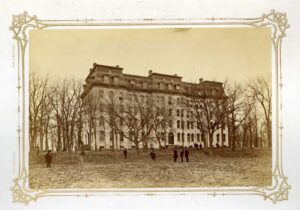
From the beginning, the founders imagined the two schools working side by side—distinct in mission, independent in governance, yet united in purpose. That vision helped shape both institutions as Chicago grew from a modest lakeside city into one of the world’s great urban centers. Over the century and a half that followed, both schools evolved dramatically. In the early decades of the 20th century, Garrett became the largest school of theology in the United States. The Garrett Biblical Institute later merged with the Chicago Training School and the Evangelical Theological Seminary to become Garrett-Evangelical Theological Seminary—changing homes on Northwestern’s campus three times along the way. Northwestern, meanwhile, also grew dramatically, gradually shedding its Methodist identity and becoming one of the world’s leading research universities.
This fall we announced the beginning of a new chapter in that partnership—one that will strengthen both institutions and bring our faculties and students into closer collaboration. In the summer of 2027, Garrett will relocate from our current buildings to a newly renovated academic home on the lakefront at the south end of Northwestern’s campus. This move represents far more than a change of address. It opens the door to deeper partnership with Northwestern, including shared classrooms and libraries and expanded access to the University’s student services and facilities.
Over the coming year we will continue refining the details of this transition. But I want to offer a first glimpse into our future home and share why Garrett’s Board of Trustees believes this decision positions the seminary to flourish for generations to come.
In considering this decision, the board faced a challenge not unlike the one confronted by our founders: how best to prepare leaders for a rapidly changing world. The landscape of theological education has shifted dramatically. Today’s seminarians arrive with diverse callings, circumstances, and pathways into ministry. A locally licensed pastor pursuing an MDiv while continuing to serve a congregation has different needs than a recent college graduate beginning full-time study. International students studying from their home countries require different forms of support than those who relocate to Evanston with their families.
Simply put, there is no longer a single “typical” Garrett student.
This diversity is not a challenge to overcome—it is one of our greatest strengths. Garrett has experienced six consecutive years of enrollment growth, bringing into our classrooms a remarkable range of theological traditions, cultures, professions, and national perspectives. That diversity enriches every student’s education. But sustaining that growth requires a learning environment designed for the realities of theological education today: flexible, connected, and capable of supporting multiple forms of learning and community.
Our current Gothic campus spreads faculty, staff, and students across seven separate buildings. While beautiful, the layout often leaves members of our community feeling surprisingly disconnected from one another.
Our new facilities will bring faculty offices, administrative spaces, classrooms, and gathering areas into closer proximity, creating a campus designed intentionally for collaboration and community. Comfortable lounges will provide places for students to gather informally—the kinds of spaces where late-night theological conversations often become some of the most formative moments of seminary life. Our centers and institutes will have new homes that place them more visibly and vibrantly at the heart of our shared work and in direct proximity to one another, enabling a new era of shared research and collaboration.
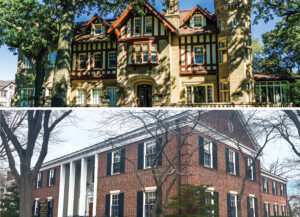
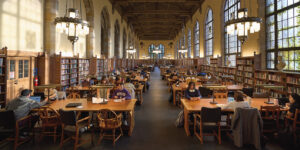
These renovated buildings will represent only part of Garrett’s campus. Through our partnership with Northwestern, the seminary will become part of a much wider academic and residential ecosystem including Northwestern’s renowned University Libraries, gaining fuller access to one of the nation’s premier academic collections.
Classes will be held in newly renovated classrooms, adjacent to the university chapels, equipped with technology that supports dynamic hybrid learning for both on-campus and distance learners. For the first time, Garrett students will receive Northwestern “Wildcards,” providing access to dining halls, study spaces, and other campus resources. Weekly worship will take place in Northwestern’s Vail chapel, offering beautiful space for intimate prayer services, with access to Alice Millar Chapel for larger gatherings.
Our residential students will live in Northwestern graduate housing, where Garrett will continue to offer subsidized rent to maintain affordability. Living within Northwestern’s graduate community will open new opportunities for connection and engagement across disciplines.
In short, our students will experience a campus that is both more intimate and far more expansive—combining the close-knit community of Garrett with the resources of a major research university.
These changes will also strengthen the experience of the many students who study with us from a distance. Today, a significant and growing portion of Garrett students complete their degrees either partially or fully online. They deserve an educational experience every bit as rich as that of our residential students.
Our faculty have already made major strides in developing innovative hybrid teaching practices and redesigning courses for digital learning. But to fully realize this vision, our physical spaces must also support that pedagogical creativity.
Our renovated classrooms will incorporate advanced technology designed specifically for hybrid instruction, allowing online students to participate fully in discussion and collaboration. Digital access to library resources, Garrett’s guest lectures, and campus events will ensure that students studying from around the world are fully integrated into our community’s intellectual and spiritual life. In this way, the new campus will help us extend Garrett’s reach, creating a seminary that is both deeply rooted in place and genuinely global in scope.
Perhaps the most exciting possibilities of this relocation are the intellectual partnerships it will make possible. Already, Garrett students benefit from access to academic offerings such as the Kellogg School of Management’s nonprofit leadership program and Northwestern University Hospital CPE program. At the same time, Garrett faculty contribute important perspectives to Northwestern’s scholarly conversations.
For example, the Job Institute for Spirituality and Spiritual Formation is engaged in collaborative research exploring the relationship between spirituality and mental health. The Stead Center for Ethics and Values is helping shape conversations about the ethical use of artificial intelligence and the cultivation of digital well-being for young people. Garrett’s Religion and Global Health Forum collaborates with researchers leading programs in medicine and public health to explore how faith communities can advance whole-person health around the world. Bringing our communities into closer proximity will only deepen these collaborations.
These partnerships are especially important at this moment in history. Ethical questions surrounding artificial intelligence are reshaping debates about technology and human dignity. Understanding religious identity is increasingly essential for political analysis both in the United States and globally. Christian nationalism continues to challenge democratic institutions and distort the public witness of faith. Religious and ethical illiteracy threaten the quality of civic discourse.
In such a moment, theological scholarship and religious literacy are not peripheral concerns. They are essential for cultivating thoughtful leadership and healthy communities. Garrett is committed to equipping pastoral leaders and scholars who can help cultivate communities of justice, compassion, and hope—leaders who can demonstrate how faith traditions, rightly understood, call us toward the flourishing of all people. Northwestern students will benefit from Garrett faculty’s expertise in these areas, just as Northwestern’s faculty enrich our own students’ learning through interdisciplinary collaboration.
This relocation also represents an important milestone in Garrett’s broader vision for the future. The seminary is investing in the people, programs, and partnerships that will shape theological education for the next generation. Our new campus home will allow Garrett to steward its resources more effectively while strengthening the academic collaborations, technological innovation, and global reach that define our mission today.
For alumni and friends who care deeply about the future of theological education, this moment represents not simply a move—but a renewal of Garrett’s enduring commitment to the thriving of the church and the healing of the world.
In the coming year we will share more details about the relocation and the opportunities it will create. Architectural renderings, classroom designs, and plans for shared student services will become public as they are finalized.
For now, it is worth pausing to reflect on the broader promise of this moment. Nearly 175 years after Garrett and Northwestern were founded, both institutions remain committed to rigorous scholarship, ethical leadership, social progress, and the conviction that learning can nurture abundant life.
The world has changed in ways our founders could scarcely have imagined. Yet the vision they set in motion—of institutions working together to advance knowledge, public service, and the common good—continues to guide us.
By renewing that partnership for a new era, we are building on the cornerstone our forebears laid so long ago. And we believe the brightest days of this relationship, and of both institutions, still lie ahead.