

A Ministry of Making Things Possible
September 27, 2026
“I went to seminary assuming that I would go pastor a small congregation.” While the Reverend Dr. Brian Smith (MDiv ’15, DMin ’24) did eventually answer that call, his first job after graduation was at Garrett Seminary itself. When Dr. Smith accepted the position as Assistant Director of Development, what he couldn’t have anticipated was that it would begin more than a decade of stewardship ministries—that God would empower countless other clergy through his faithful service. “Initially, I was perplexed,” he admits. “I was thinking, is this really ministry? But then I began meeting with alumni across the country, learning about the church more broadly—the art of communicating, building trust, and raising funds. God gives us all different tasks, and my assignment has been convening and bringing resources to the kingdom and to those who practice.”
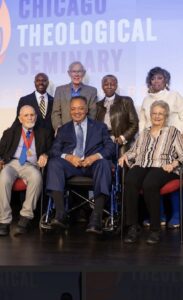
As the first Black member of Garrett’s development team in the seminary’s history, Dr. Smith was already making history. But it was also an opportunity that significantly shaped his future work. “I worked with hundreds of clergy, including many African-American congregations throughout the Pan-Methodist church,” he explains. “Throughout that experience, I also became very active with the Center for the Church and the Black Experience (CBE).” He even wrote two plays that the CBE helped to host in Evanston’s Fifth Ward, using art to bring people together—within and beyond the church. These experiences culminated in his work to celebrate the CBE’s 45th anniversary, which brought more than 300 alumni and community members to Garrett’s campus. “Even the late Rev. Jesse Jackson crashed our event,” Dr. Smith laughs, remembering the exuberant joy.
After leaving Garrett, Dr. Smith continued the work he started—accepting a position at Chicago Theological Seminary, where he currently serves in his 9th year as Director of Strategic Partnerships. In this role, he had the opportunity to take relationships he developed throughout Chicagoland and strengthen them when that was needed most. “In 2020, we received a grant from the Henry Luce Foundation. They knew I was in contact with organizations working on the frontlines in Chicago,” he explains. “At that point, we were dealing with both the aftermath of the George Floyd murder and the pandemic. So, I pulled together community leaders, pastors, and stakeholders from all over the city, conducted listening sessions, and helped determine where we could make investments to alleviate suffering.” The seed God planted years earlier bore abundant fruit.
While Dr. Smith left Garrett in a professional capacity, the relationships he developed continued to flourish. He helped congregations invest in mental health counseling and group therapy for clergy, offered microgrants to improve their technological capacities, even set up vaccine clinics to care for neighbors’ health. It’s unsurprising, then, that when the Rev. Dr. Reggie Blount was looking for someone to help resource Black pastors, Dr. Smith quickly came to mind. The Oikos Project—co-founded by Dr. Blount and Dr. Sidney Williams—helps Black churches expand their social impact by recognizing the various forms of human capital they already possess—using those gifts to raise funds and enact ministries to improve their neighborhoods. As the organization gained momentum, Oikos began to assemble ministry cohorts to train people in that paradigm and trusted Dr. Smith to be their coordinator.
Faithful work often comes full circle. After leading a very successful first Chicagoland Oikos cohort, the second convened 15 Garrett alumni—eager to deepen the ways they served their neighbors. “Part of what I appreciate about Garrett’s vocational formation is that this ethos already runs through its graduates,” Dr. Smith notes. “We didn’t start from scratch. Every single person in the cohort are system-oriented servants who want to develop concrete ministries for social impact.” For some, this meant invested in affordable housing projects. Others focused on feeding ministries or community health initiatives. Still others invested in solar energy. Some incubated small businesses.
For Dr. Smith, what matters most is the way these efforts embody the life and work of the One who we are called to serve. “Wherever Jesus went, people were healed. People were fed. People were educated. People were liberated,” he explains. “People became better because of his presence and the presence of the disciples. As a follower of that Christ, I believe those wonderful words of righteousness that we study and repeat each Sunday should take hold within the world.” Dr. Smith’s commitment to gathering communities around social holiness was honored when he was chosen to lead development of the Jesse Jackson Oral History Project, now permanently archived in the Chicago History Museum.
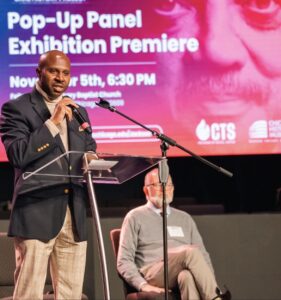
Considering the scope of his faithful work, it’s a reminder that the choice he felt he faced as a younger minister is a false one: Stewardship is and always will be a constitutive part of ministry. “I realized that I am called to help shape ministries and to support faith leaders who are doing the good work of righteousness in the world,” Dr. Smith concludes. “That’s why I’m grateful that Garrett always stressed a community approach to ministry. Our missions complement one another.” A career that began in curating resources for one institution has blossomed into collaboration so deep and wide that Dr. Blount affectionately refers to him as “the Bishop of Chicago.”
And still, love for Garrett sings through the lessons he learned there. “When I used to make 10 or more calls a week to raise money for Annual Fund, it was a chance to remind people how they can contribute to a mission that’s larger than themselves,” he says. “Ultimately, we’re responsive and responsible to kingdom—to offer support wherever people express needs.”